
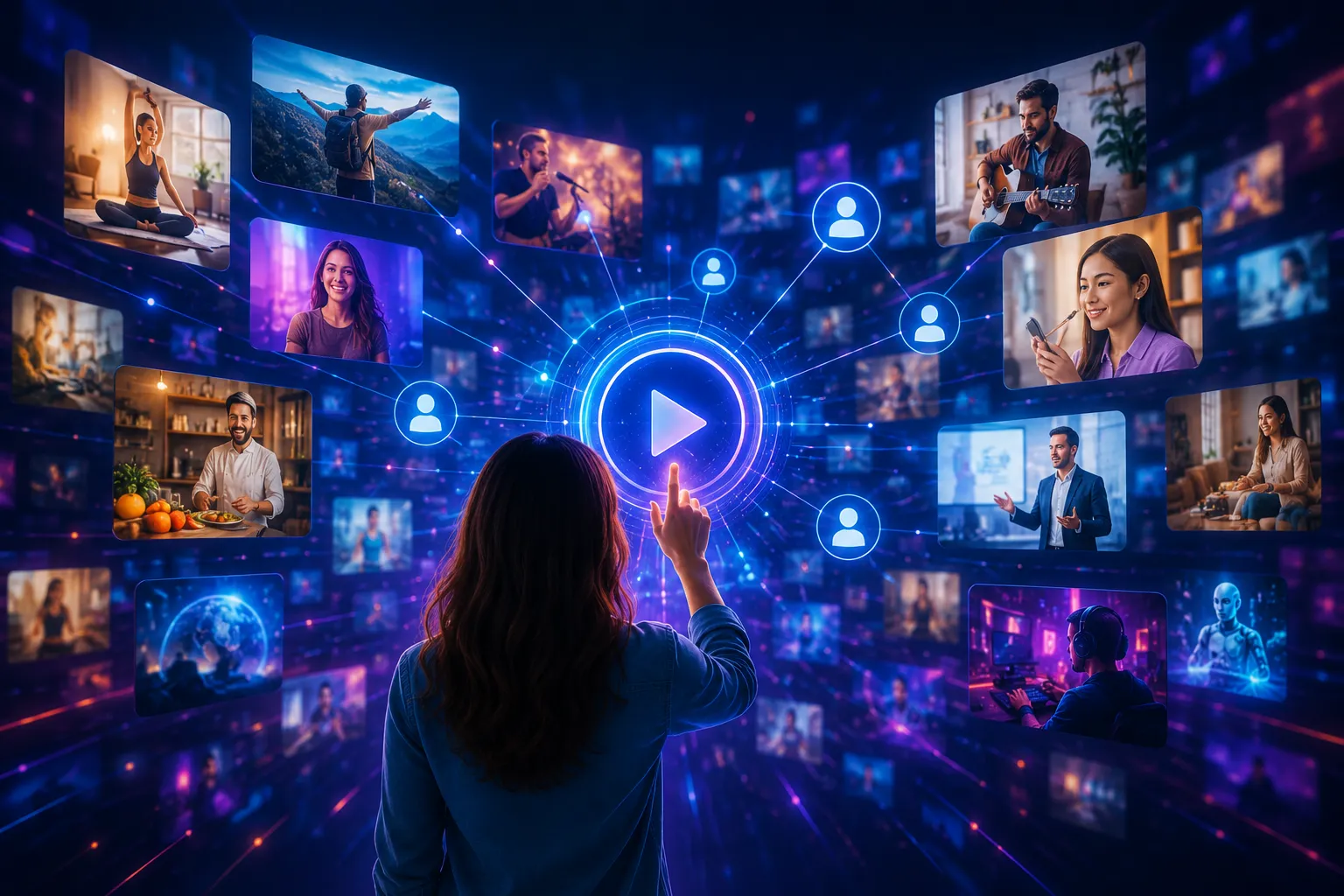
A few years ago, generic marketing used to be the only option. Produce one video, send it to everyone, hope it resonates with enough people to be worth the cost. That model is swiftly being replaced by hyper-personalized video marketing.
Audiences in 2026 have been conditioned by years of algorithmic content – feeds that know what they want, recommendations that feel intuitive, ads that show up at suspiciously relevant moments. The expectation has shifted. Content that ignores who you are feels lazy now. Even if viewers can’t quite articulate why it doesn’t land.
Hyper-personalized video marketing is the response to that shift. AI pulls together what a brand knows about a viewer – behaviour, history, preferences, where they are in the customer journey – and uses it to shape what that person actually sees. The messaging, the product shown, the offer, the call to action. All of it adjusted for the individual.
The technology isn’t the challenge anymore. Knowing how to use it effectively is what sets leading brands apart.
What Is Hyper-Personalized Video Marketing?
Genuine hyper-personalization goes way beyond adding your customer’s name to the video’s caption. It uses granular customer data (purchase history, browsing behaviour, demographic information, CRM records, even how far someone got through a previous video) to dynamically shape what each viewer sees. Two customers watching what appears to be the same video might actually be watching entirely different versions. Different products shown, different price points, different CTAs at the end.
This is what personalized brand storytelling looks like in 2026. The story changes depending on who’s in the room. The brand voice stays consistent. What shifts is the relevance of the message to the specific person receiving it.
The difference in engagement between a video that feels built for you and one that clearly wasn’t is huge.
How AI Creates Personalized Videos at Scale
Manually producing thousands of video variations is a breakdown waiting to happen.
AI makes the scale viable. The system draws from CRM data, site behaviour, purchase patterns & audience segmentation to determine which version of a video each viewer receives. Scene selection, voiceover, on-screen text, product imagery, the specific offer shown, can all be dynamically assembled by the AI without a human editor touching each version individually.
Generative AI in storyboarding has made the pre-production side faster. Visual concepts for multiple audience segments can be planned and tested before committing to full production. That front-loaded thinking saves significant time downstream when the AI is generating variations at volume.
The human role shifts to building the underlying content architecture. Deciding which variables get personalized and which stay fixed. Writing source scripts flexible enough to work across segments. Reviewing output for quality and brand consistency. The AI handles the assembly. People handle the judgment calls.
Benefits of Hyper-Personalized Video Marketing
Relevance is the variable that changes everything downstream.
Watch time goes up when viewers aren’t sitting through content built for someone else. Click-through rates improve when the CTA reflects something the viewer actually wants. Conversion rates follow. These aren’t marginal improvements. personalized video campaigns consistently outperform generic equivalents across awareness, consideration & purchase stages.
There’s a trust dimension too. The psychology of brand videos is consistent on this: audiences trust brands that demonstrate understanding. A video that addresses a viewer’s specific situation — the industry they work in, the product they browsed last week, the question they asked in a support chat — signals that the brand is paying attention. That signal builds goodwill faster than any amount of broad messaging.
Repeat engagement also improves. A viewer who receives consistently relevant content from a brand doesn’t train themselves to ignore it. That’s a long-term retention benefit that compounds.
Where Brands Can Use Hyper-Personalized Video Marketing
The touchpoints where personalized video adds value are more varied than most brands initially consider.
Email marketing is the obvious starting point. A personalized video in an email outperforms static content on almost every metric. The subject line promises something made for the recipient. The video delivers on it.
Abandoned cart recovery is a high-intent moment that most brands handle badly. A generic “you left something behind” email is easy to ignore. A video showing the specific product the customer left, with the specific reason they might want it, is considerably harder to dismiss.
Sales outreach has been transformed by personalized video. A 2-minute video built around a prospect’s company, their market & a specific problem they’ve publicly described performs better than any cold email template. It shows work. It signals genuine interest.
Across the brand video funnel, personalization makes each touchpoint more efficient. Awareness content that reflects a viewer’s demonstrated interests. Consideration content that addresses their specific objections. Decision-stage content that shows proof from customers who look like them. Post-purchase content that reflects what they actually bought.
Loyalty programmes, event invitations, account updates — anywhere a brand communicates with a known customer individually, personalized video outperforms the generic version.
Best Practices for Creating Effective Personalized Videos
Data quality is the foundation. AI personalization built on inaccurate or outdated customer data produces content that feels wrong, sometimes embarrassingly so. Audit the data before building the system around it.
Privacy compliance is non-negotiable and getting more complex. Different markets have different rules around what customer data can be used, how it needs to be disclosed & what consent looks like. Build this into the production brief rather than treating it as a legal afterthought.
Keep the personalization invisible. The best personalized video doesn’t feel personalized. It just feels relevant. When the mechanics show — when it’s obvious the customer’s name was inserted into a template — the effect goes flat. Shot composition and cinematic sound design applied consistently across all variants keep the production quality high regardless of which version a viewer receives.
Test before scaling. Running a personalized video campaign at full volume before validating that the variants actually perform differently is an expensive way to learn. Test the segments. Confirm the differences are meaningful. Then scale.
Brand consistency across variants is the part that breaks down without a clear framework. If the tone, visual language & messaging architecture aren’t defined upfront, different versions of the same campaign start to feel like they came from different companies.
Common Mistakes Brands Should Avoid
Over-personalization is a real risk that gets underplayed in the enthu around this format.
A viewer who receives a video that references something very specific — a product they looked at once, a location they mentioned in passing — can find it unsettling rather than impressive. The line between “this brand knows me” and “this brand is watching me” is thinner than marketers often assume. Personalization that creates that uneasy feeling damages trust faster than generic content would.
Poor segmentation produces the illusion of personalization without the substance. Splitting an audience into two segments and calling it hyper-personalized is a huge miss. The segments need to be specific enough that the content genuinely reflects meaningfully different customer realities.
Removing human oversight from the production chain entirely is where things go wrong quickly. AI-generated variations need review. Inaccurate data fed into a personalization system produces confident-sounding content that’s factually wrong about the viewer’s situation. Pacing in video editing across variants also needs a human eye — automated assembly can produce timing that’s technically functional and emotionally flat.
Inconsistent branding across variants is a slower-burn problem. Individual versions might pass review in isolation. Seen side by side, they feel incoherent. Establishing brand constants that don’t get personalized — visual style, tone, music — protects against this.
The Future Is A Different Video for Every Viewer
There’s a version of this that sounds overwhelming. Thousands of video variants, complex data pipelines, AI systems generating content at volume. Hard to know where to start.
Most brands don’t start at that scale. They start with one high-value touchpoint — an email campaign to a segmented list, a sales outreach sequence for a specific vertical — and build from there. The data gets richer. The variants get more refined. The system learns what works.
What’s clear is where this is heading. The broadcast model — one message, everyone gets it, hope for the best — is becoming a fallback for brands that haven’t figured out the alternative yet. The brands investing in personalization infrastructure now are building something that improves with every interaction.
Corporate video production services built around personalization start with a different brief than standard production. Less about crafting the perfect single video, more about designing the system the video lives in.
Want video content that adapts to your audience instead of ignoring them? Kween Media helps brands build personalized video strategies from the ground up. Get in touch with our personalization pros today.