
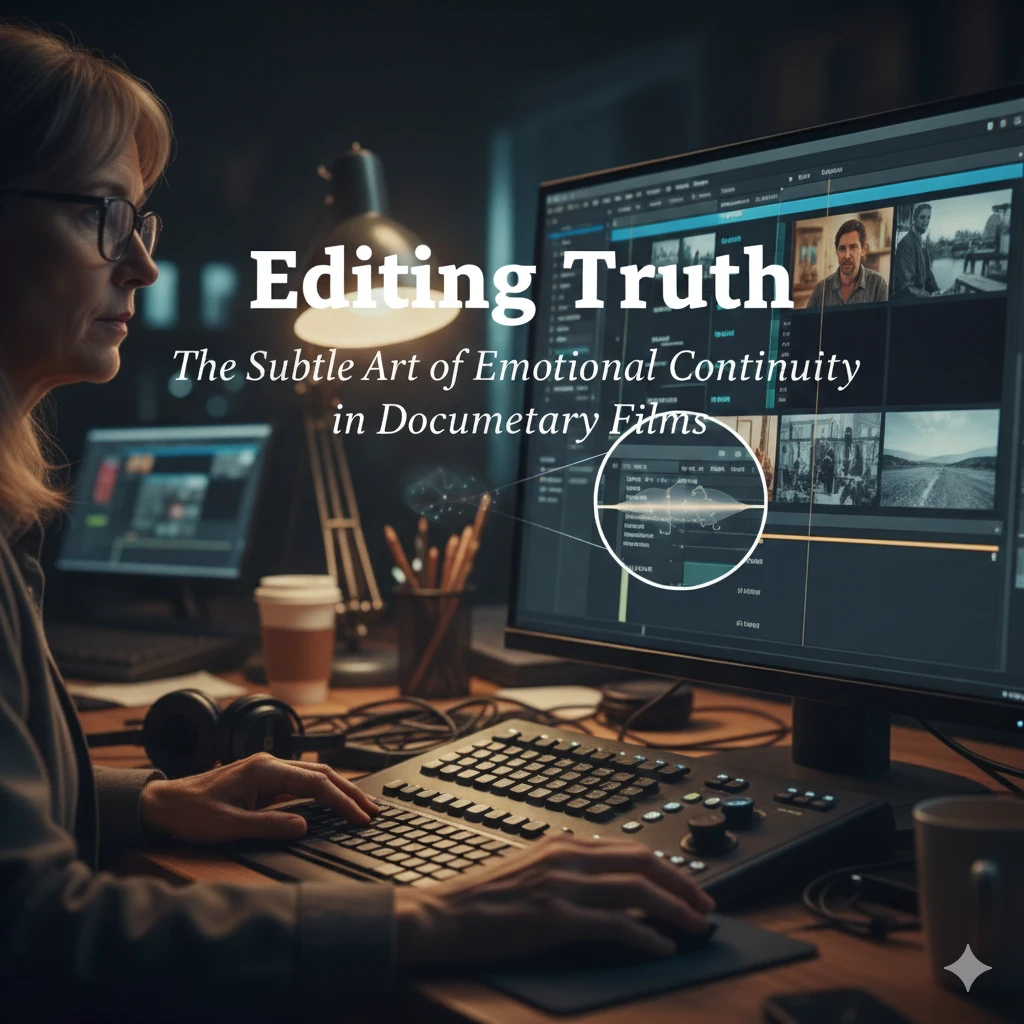
Documentary editing exists in a paradox. The footage is real, unscripted moments, genuine reactions, actual events. But the story? That gets constructed in the editing suite. Here’s what separates basic editing from documentary films that stay with viewers: emotional continuity. Not manipulating feelings, but crafting a coherent emotional journey from hours of raw footage that viewers can follow without getting lost or zoning out.
Most documentaries fail not because of weak footage or poor subjects. They fail because editors couldn’t maintain the emotional thread connecting scene to scene, interview to interview, moment to moment. Viewers disengage when they can’t track the emotional logic, even if they can’t articulate why.
This guide explores how best practices for documentary film editing preserve factual integrity while building the emotional continuity in editing that transforms footage into a story. Whether you’re working with documentary film editing services or cutting your own project, understanding these principles determines whether your film connects with its audience or simply exists.
The stakes: documentaries that achieve emotional continuity get watched, shared, and remembered. Those that don’t get abandoned halfway through, regardless of how important the subject matter might be.
Understanding Emotional Continuity in Documentary Storytelling
Emotional continuity means viewers can track the progression of your story without confusion or whiplash. In narrative films, this happens through scripted arcs. Documentary storytelling faces a harder challenge: creating that same coherent emotional journey from real footage that wasn’t shot with your final story in mind. You’re discovering the narrative during editing, not executing a predetermined script.
The importance of emotional continuity in storytelling for brands shows up in viewer behavior. Viewers often abandon documentaries in the first 15 minutes when the emotional trajectory feels unclear. The reason is simple. When viewers can’t grasp where the emotional story is heading, their brains disengage.
Factual storytelling through film editing requires balancing two competing demands: represent reality accurately while shaping that reality into something audiences can emotionally process. This isn’t manipulation, it’s translation. Raw reality rarely follows clean emotional arcs. Events happen chaotically, interviews ramble, moments of significance get buried between irrelevant details.
Crafting a compelling narrative from raw footage starts with recognizing that documentary subjects already lived through an emotional journey. Your footage captured fragments of those journeys. Editing assembles the fragments into the coherent experience the subject actually lived. You’re not creating emotion that wasn’t there, you’re organizing existing emotion into a structure viewers can follow. The difference matters. It’s what separates honest documentary work from propaganda.
Balancing realism and emotion in documentary films means respecting chronology when it serves understanding, but not letting chronological order override emotional logic. Sometimes telling events out of sequence creates better emotional clarity. The question: does this ordering help viewers understand what the subject experienced, or does it distort that experience?
Key Editing Techniques That Shape Emotional Rhythm
Technique matters less than knowing when to deploy it. Here’s what actually works.
Montage and cross-cutting
Montage compresses time while amplifying emotional intensity. A series of shots showing a subject’s daily routine can communicate grinding repetition in 30 seconds that would take 10 minutes in real time. Cross-cutting between parallel storylines builds tension through comparison. Cut between an activist preparing testimony and legislators debating policy, suddenly viewers feel the stakes of both situations simultaneously.
These creative film editing techniques work when they clarify emotional reality. They fail when they manufacture emotion that wasn’t inherent in the footage. The test: would the subject recognize this representation as accurate to their experience?
Jump cuts
Jump cuts, those jarring cuts within the same shot that skip time, typically signal mistakes in traditional editing. In documentaries, they can be strategic tools for showing emotional disruption. An interview subject discussing trauma might need several attempts to articulate their feelings. Most editors smooth this with B-roll coverage, hiding the struggle. But sometimes that struggle is the story. Keeping the jump cuts communicates the truth that smooth coverage would hide.
The role of pacing and rhythm in documentaries depends on matching edit tempo to emotional intensity. Slow cuts during reflective moments give viewers processing time. Rapid cuts during crisis sequences match the chaotic feeling of those experiences.
Controlling rhythm
Rhythm isn’t about speed, it’s about variation. A documentary that maintains the same pace throughout puts viewers to sleep regardless of content quality. Strategic rhythm control means lengthening moments that deserve emphasis while compressing sections that provide context but not emotional weight. A subject’s breakthrough realization deserves the full uncut response. Background on how they got there can compress into efficient montage.
The Role of Sound Editing in Enhancing Emotional Continuity
Picture gets attention. Sound creates the emotional response.
Sound editing in documentaries works on multiple layers simultaneously. Dialogue carries information. Music suggests how to feel. Ambient sound grounds scenes in place and reality. When these layers align toward a unified emotional direction, viewers feel the intended emotion. When they conflict, confusion results.
Music integration in documentaries walks a fine line. Too much feels manipulative, like you’re forcing emotion the footage can’t support. Too little leaves emotional moments hanging without punctuation. The technique that works: use music to amplify emotion already present in the footage, not create emotion that’s absent. If an interview subject is fighting tears while discussing loss, music can support that vulnerability. If they’re matter-of-fact, adding mournful music feels dishonest.
Sound effects typically work best when subtle. The creak of a door opening, footsteps approaching, paper rustling, these small sounds don’t call attention to themselves but create subliminal continuity. They make scenes feel inhabited and real rather than assembled from isolated clips.
How editing shapes emotional impact in documentaries often comes down to sound decisions more than pictures. You can feel the difference between authentic sound from the scene versus library music imposed during editing. Viewers might not consciously register that difference, but their emotional response changes based on whether the sonic environment feels genuine.
Collaboration Between Editors and Directors: A Delicate Balance
The director lived with the project for months or years before footage reached the editor. They have strong opinions about what matters. The editor sees the footage fresh, noticing patterns and possibilities the director might miss. This tension creates value when managed well, conflict when ignored.
Effective collaboration with a professional documentary editing company requires directors to articulate their vision while staying open to discoveries that emerge during editing. The footage might tell a different story than expected. Subjects might reveal more compelling narratives than initially anticipated.
Editors need to balance respect for the director’s intent with advocacy for what will actually work on screen. This means showing alternative cuts even when you know the director will resist. It means understanding that documentary subjects trusted the director, maintaining that trust through honest representation falls on both director and editor.
Working with a professional film editing company helps when both parties commit to the same goal: serving the story that exists in the footage, not the story anyone wished was there. The test question for both: does this choice help viewers understand and feel what actually happened, or does it serve something else, our artistic ambitions, our desire to impress, our attachment to specific footage?
Best Practices for Professional Documentary Film Editing Services
Not all editing services understand documentary work. The skills that make someone good at cutting commercials or narrative films don’t automatically transfer to documentary editing.
When evaluating documentary storytelling techniques or working with a documentary editing company in India, specific criteria separate competent technical work from editorial expertise:
Experience with unscripted content – Can they build a story from raw material rather than execute a predetermined script? Do they understand how to find narrative structure within footage rather than impose it artificially?
Cultural sensitivity in documentary editing – Documentary work often involves ethnographic content, minority communities, or sensitive subjects. Professional video editing for documentaries requires editors who understand representation politics and can avoid perpetuating harmful stereotypes through editorial choices.
Technical capability matched to content needs – High-end documentary post-production isn’t always about sophisticated effects. It’s about mastering documentary film editing fundamentals, pacing, rhythm, continuity, that serve emotional storytelling. The best film editing company for your documentary has experience with projects similar to yours.
Post-production workflow efficiency – Documentary video services should demonstrate organized systems for managing hundreds of hours of footage, maintaining version control during extensive revision processes, and handling archival material or mixed-format sources.
Film editing services that deliver best results typically maintain long-term relationships with documentary directors. This accumulated understanding creates efficiency and trust that transactional relationships can’t match.
Behind the Scenes – Insights into Professional Documentary Editing
The challenges in documentary editing differ fundamentally from other post-production work.
Behind the scenes of professional documentary editing, the biggest challenge isn’t technical, it’s emotional endurance. You’re watching the same footage repeatedly for weeks or months, looking for the story within it. This requires sustaining fresh perspective despite familiarity that breeds blindness.
Experienced documentary editing company teams build breaks into workflow. Step away from footage for days before making final decisions. Show rough cuts to fresh viewers who can spot confusion you’ve become numb to. Maintain what editors call “beginner’s mind”, approaching footage as if seeing it for the first time even after the hundredth viewing.
The documentary editing process step-by-step typically follows this pattern: extensive viewing without editing (logging everything), assembly of promising moments into a rough structure, testing that structure against emotional logic, refining transitions and pacing, polishing technical elements, then final reality check against original goals.
Tools and software matter less than process. Whether using Avid, Premiere, or Final Cut, the fundamental work remains the same: finding the emotional through-line that makes disparate footage cohere into story. Cinematic documentary post-production capabilities come from editorial judgment more than software features.
Real-world anecdotes from professional video editing for documentaries reveal common patterns. Directors often resist cutting favorite scenes even when those scenes disrupt emotional flow. Subjects sometimes want more context than viewers need. The editor’s job: advocate for what serves emotional continuity even when that means difficult conversations with stakeholders.
Film editing company insights consistently emphasize one principle: emotional continuity beats chronological accuracy when they conflict. If telling events slightly out of order creates better emotional understanding, do it. Let the main film follow emotional logic.
Conclusion
Documentary editing demands a specific kind of integrity, honoring truth while crafting story. These goals can coexist, but only through disciplined attention to emotional continuity.
Mastering emotional continuity in documentary films means understanding that you’re not creating emotion from nothing. You’re organizing the emotion that already exists in your footage into structures viewers can follow without confusion.
For filmmakers working on documentary projects, prioritize emotional coherence in every editorial decision. Ask not “is this clip technically good” but “does this moment help viewers follow the emotional journey.” That question, asked consistently, produces documentaries that connect.
Visual storytelling for filmmakers reaches its full potential when technique serves truth and structure serves emotion. The art of shaping real stories through editing ultimately comes down to maintaining the thread viewers can follow from the opening frame to the final image.
At Kween Media, we have mastered the art of documentary storytelling and have immortalized many such stories with our professional documentary editing services.
Contact us today to tell yours!