

Traditional corporate communication, aka reports, documents and presentations, often struggle to get their message across. They feel too formal compared to how people actually consume information today. Modern audiences expect content that is easy to consume and feels like other content they encounter in their everyday online experiences. Corporate videos bridge this gap. They’re now a go-to communication tool across industries, and corporate videographers are at the heart of this transformation. They turn corporate concepts into engaging video content that helps meet business goals.
This blog breaks down their role, skills, and impact in the modern business world.
Why Corporate Videography is a Specialized Field
Corporate videography isn’t the same as filming events, news, or entertainment. It’s goal-driven and strategic. Every video serves a purpose – whether it’s explaining a product, training employees, attracting talent, or sharing a brand story.
There are many corporate video types –
- Explainers make complex topics simple.
- Testimonials build trust through real stories.
- Event recaps showcase culture and milestones.
- HR videos attract the right people.
- Product demos hero features and benefits.
The complexities are layered. Unlike basic videography, corporate videos must follow brand guidelines, appeal to specific audiences, and ace business goals. On top of this, corporate videographers need to follow legal or industry rules that control what can (and more importantly, cannot) be shown or said.
Top Responsibilities of a Corporate Videographer
Corporate videographers manage projects from start to finish. They don’t just shoot – they collaborate, plan, direct, and deliver content that works. Going well beyond technical execution, their role is that of a strategic partner. They work closely with clients, ensuring every video meets one or more business objectives. Here is a short breakdown of what they do –
Collaborative Concept Development
It starts with asking the right questions:
Who’s the audience? What’s the goal? What do we want viewers to do afterward?
Videographers work closely with clients to shape this vision. From understanding the competitive edge to brainstorming formats – like customer stories or leadership interviews – every decision is tied to business outcomes.
Then visual concepts are created based on these requirements. Videographers brainstorm different approaches and come up with a creative storyboard that covers all the discussed points. They might propose customer success stories for lead generation, behind-the-scenes content for company branding, or executive interviews to position management as thought leaders.
Scripting, Pre-Production Planning and Logistics
Corporate videographers help write or review scripts, making sure the structure flows, the key points land, and the tone feels right. They involve marketing, HR, sales, and even legal to get everything aligned.
They also handle pre-production:
- Picking the right location
- Arranging talent or voiceovers
- Choosing equipment
- Building a shoot schedule
- Getting permits and managing budgets
To sum up, corporate videographers often act as project managers, keeping everything on track and making sure no detail is missed.
On-Set Production, Directing and Team Coordination
When it’s time to shoot, corporate videographers oversee every technical detail – camera setup, lighting, sound, and directing. On bigger shoots, they lead the crew, making sure camera operators, audio techs, and assistants all stay in sync for a smooth production day.
As an added challenge, they often work with employees instead of professional actors. Getting a natural performance from them requires skill, patience, and clear direction – a balancing act only skilled corporate videographers can nail.
Video Editing and Post-Production Finishing
The final step for a corporate videographer is turning raw footage into a clean, engaging video that hits the mark. They use editing techniques like pacing, transitions, and visuals to keep viewers interested while driving home the key message.
They also pick music that fits the brand and tone without overpowering the content, and fine-tune the audio, color, and graphics to keep everything consistent.
Finally, they export the video in the right formats, whether it’s a high-res version for presentations, a smaller file for email, or platform-optimized cuts for LinkedIn, YouTube, or the company website.
Essential Skills Required for Corporate Videographers
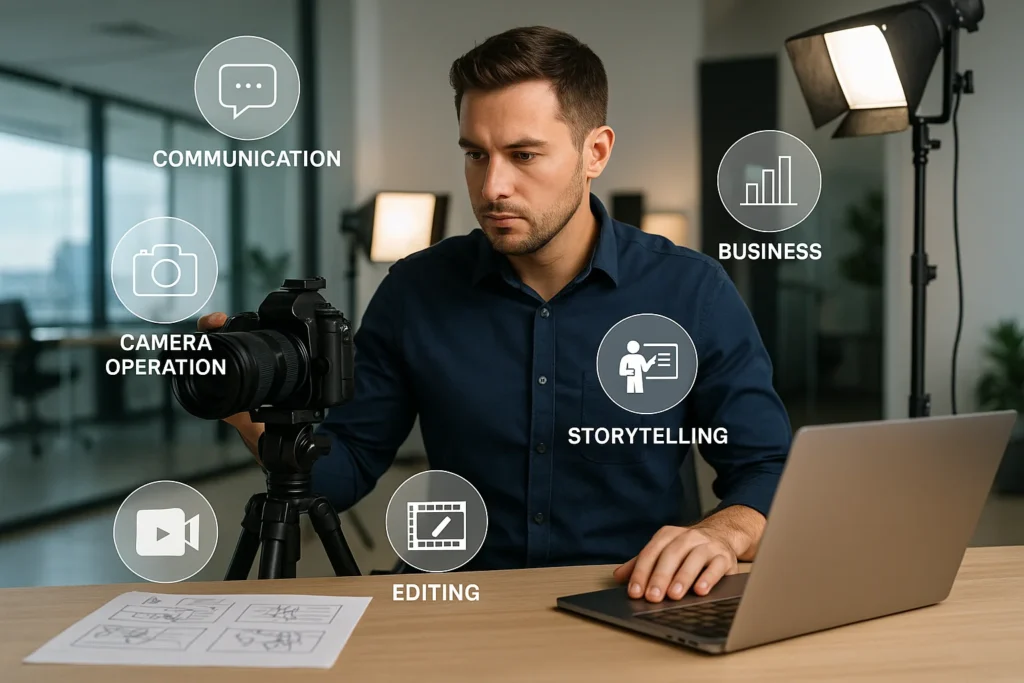
The best corporate videographers are more than tech experts. They understand business and communication.
Key skills include:
- Listening & Strategy – Understanding client goals and turning them into creative visuals
- Technical Know-How – Cameras, lighting, sound gear, and editing tools like Premiere Pro or After Effects
- Storytelling – Knowing how to grab attention, hold interest, and end with impact
- Communication – Working with clients, giving feedback, and managing crews
- Problem-Solving and Troubleshooting – Handling last-minute changes, gear issues, or time crunches with ease
Tools Commonly Used by Corporate Videographers
- Camera systems ranging from professional DSLRs and mirrorless cameras to dedicated cinema cameras, each offering specific advantages for different production requirements.
- Lighting solutions including LED panels, softboxes, and key lighting setups that create professional illumination and establish the right mood.
- Audio equipment such as lavalier and boom mics, and other recording devices to capture clear dialogue and ambient sound.
- Post-production software like Adobe Premiere Pro and Final Cut Pro, along with motion graphics tools like After Effects. These applications help with professional finishing, color correction, and visual effects integration that enhance final product quality.
Building an Effective Corporate Video Production Team
Complex corporate video projects may require specialized teams beyond a single videographer. Larger productions benefit from dedicated taskmasters who ensure high production value and efficient execution.
Essential team members include:
- Assistant Directors who can support the creative vision and overall project execution
- Camera Operators to capture diverse shots with a range of angles
- Editors with an intuitive grasp of storytelling
- Motion Graphics Artists for adding brand-consistent visual elements
- Sound Engineers who ensure professional audio quality
Hiring Considerations – Corporate vs. Event Videographers
It’s easy to assume the person who filmed your last event can handle a corporate video, too, but the two are very different jobs. Event videographers are great at capturing moments as they happen. Corporate videographers, on the other hand, craft structured stories that serve a business purpose. They truly understand your business and brand, and create videos that serve as growth drivers, not just stories that look pretty.
So when you’re choosing a corporate videographer, expand your search beyond great visuals. Look for someone who knows how to tell the right story – your business’s story. Check their past work portfolio to determine if they have worked on similar projects and executed them from start to finish. For high-budget projects, choose teams with diverse and complementary strengths as opposed to a solo videographer. At Kween Media, we bring exactly this to the table with our team of top-notch videographers and technical experts. With our competence, we turn business ideas into videos that click, convert, and drive the message home. Let’s make something that works for your brand and your bottom line. Get started today!